
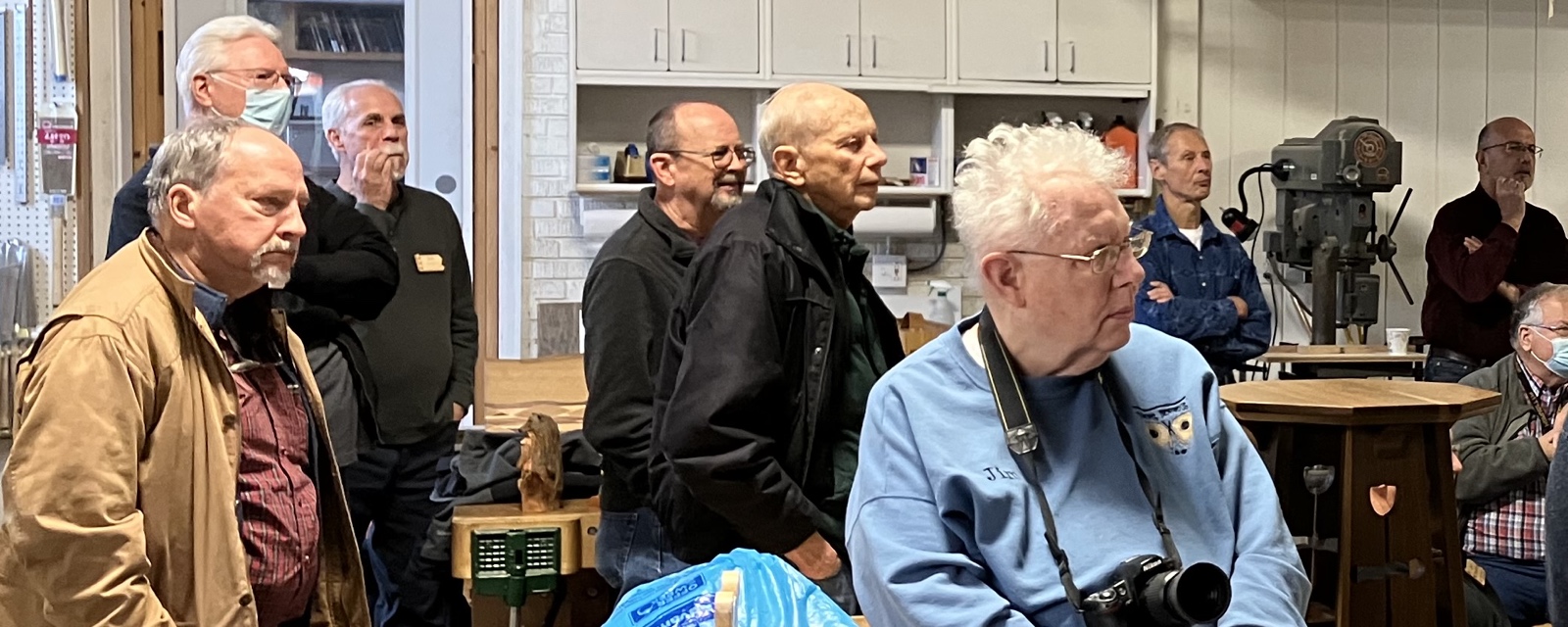
Regardless of whether you use your table saw to make toothpicks, or think nothing of hand-dovetailing a kitchen’s worth of drawers, as 21st-century woodworkers we all end up using electricity in our shops. For some of us it may be little more than lighting and the occasional bench top planer, and for others it might require having a 200-amp service installed. Therefore, understanding how to safely use and work with electricity should be a part of a woodworker’s knowledge base.
Please join us as WPW member Ralph Sprang leads a presentation/discussion on electricity as it is used in a typical wood shop. It is not the intention of this program to attempt to teach anyone how to be an electrician, but instead to fill in the gaps in your personal knowledge of how electricity works and to help you determine where you might want to do additional research. Yes, there will be some charts/graphs and a little math, but we’ll keep this technical stuff to a minimum and present it early in the program before people get sleepy! Our goal is to expose you to enough information to better understand electricity and provide a starting point for those of you who may wish to learn to work with it for simple shop tasks like working on your equipment or installing an additional receptacle.
The program will include information regarding:
- 120 VAC and 240 VAC systems, and how they are different.
- Amps, voltage, and watts… What does it all mean?
- Grounding; why it’s important (GFCIs as well).
- Why wire gauge is important.
- Single-phase and three-phase electricity, and how they are different.
- Single-phase to three-phase converters.
- Low-voltage electricity.
- Shop lighting… Changing to LED to save money and reduce electrical load.
- AC and DC electricity, and how they are different.
- Batteries as they relate to cordless tools (volts, amp-hour ratings, power, etc.).
- Various types of electric motors, from small DC cordless tools (Drills/drivers), to AC universal motors (think routers), to a 3 HP planer motor.
- How “powerful” is a motor (watts, HP ratings, developed HP, etc.)?
Please come prepared with any questions that you may have, as these will help guide the discussion to your specific interests.
– Bill James